
Need Help? Click Here To Contact Us
THE INVISIBLE EXPERTISE PATTERN IS BELOW
Why Your Clients Can Describe Your Work Better Than You Can
You can do the work. But the moment someone asks you to explain it, the words just stop. And the deeper your work goes, the harder it gets to describe.
You came here to find out why — why the thing you’re most certain you possess is the thing you can’t make visible. Here’s the answer. It has a name.
The Expertise Paradox™
The better you are at the work, the worse you are at describing it.
That’s not irony, it’s a trap with a name.
You’ve probably already tried to fix this.
You may have hired a website designer.
They asked, “So what do you do?”
And you couldn’t give them an answer that captured it.
The site went live.
It still doesn’t sound like you.
Maybe a business coach tried to help you articulate it.
You did the exercises.
Wrote the positioning statement.
The words fell flat the moment you said them out loud.
Maybe you asked ChatGPT.
It organised your words beautifully and handed you back what you already knew, but tidier.
Because AI can only work with what you feed it.
And what you fed it was your description of your work, which is the exact thing that’s missing.

But this didn’t start with the website or the coach.
Think back.
The networking event where someone asked what you do and you watched her eyes glaze mid-sentence.
The referral call where you couldn’t explain why you’re different before their attention drifted.
You’ve been reaching for these words for years.
And every time, the same thing.
Either the sentence starts with “I help people…”
…and somewhere before the part that makes you different, the words run out.
Or it goes the other way: you reach for the detail, and the more you add, the more you feel yourself losing the thread of the question itself.
Either way, it doesn’t land.
For Patricia, it came at the end of every first call.
Twenty-two years a grief counsellor, and she’d hear a potential client ask the question she dreaded most:
“So what’s your process?”
And she’d hear her own voice go soft and general: “I take a very individualised approach” — and watch the woman’s face settle into a polite nod.
“Let me think about it.”
She never came back.
Patricia had stopped counting how many didn’t.
She’d filed it under I’m just bad at the selling part, and gone home to a website she’d rewritten four times and still couldn’t make sound like herself.
Here’s why none of it worked for Patrica or for you.
Every coach, designer, and AI started from the same assumption:
…that you already knew what your methodology was, and just needed better words for it.
None of them asked whether it had ever been made visible in the first place.
It hadn’t.
That’s not a personal failing.
Stay with me, because this is the part that changes everything.
“I was certain I didn’t have a method. Then I saw it.”
Rosemary, Spiritual & Intuitive Healer, 20 years in practice [▶ 30 second clip]
A Fish Doesn’t Know It’s In Water
Two reasons your own method hides from you.
Neither one is a flaw.
Your process is just something you do.
You call it intuition.
A feeling you get.
And you’re right — it is.
A client says: “That thing you did last session, where you asked one question and everything shifted. How did you know to do that?”
And your honest answer is:
“I don’t know. I just… felt it.”
But that’s not all it is.

I’ve sat with over 200 practitioners.
And even when the work looks completely intuitive on the surface, I have always found the methodology underneath, driving all of it.
The more expert you become, the more invisible your method gets — because it’s become second nature.
It’s so woven into what you do that the words for it never quite come.
You walk into a session, read the room, make a dozen decisions in the first ten minutes.
Ask you afterward to describe what you did, and you’d hesitate.
Not because you don’t know.
Because you’ve stopped noticing.
You’ve been swimming in your methodology for years.
That’s why describing it feels like asking a fish to describe water.

And there’s a second reason, underneath the water.
You do this for everyone but yourself.
You sit across from a client and see the structure in their story that they’re too close to see in their own.
Seeing the pattern someone can’t see from inside it — that’s the entire job.
But you can’t do it for yourself.
For the same reason a surgeon can’t operate on her own heart.
It’s not a question of skill.
It’s a question of position.
The lens you’d use to examine your methodology is the methodology.

So if part of you has quietly believed you should have sorted this out alone, years ago — you couldn’t have.
No one sees their own pattern from the inside.
That isn’t a personal failing.
And it’s the one part of this work that genuinely needs another set of eyes.
Which means every fix you reached for better words, more confidence, another credential, was aimed at a problem you never actually had.

It's Not A Mindset Problem, It's An Articulation Problem
There’s one explanation you may have reached for more than any other:
And it’s the cruellest, because it sounds like humility.
That the reason you stay invisible is you, your mindset, your confidence, some inner block you haven’t cleared yet.
That if you just believed in yourself a little more, the words would come and the right people would find you.
You may have been told this directly.
Most practitioners in this position have.

Patricia had carried it that way for years.
Every few months she’d open the “About” page on her website to finally fix it.
She’d write a paragraph, read it back, and feel two things at once:
That it sounded like every other grief counsellor with a calm website and a soft photo, and that the truer version, the one that actually said what twenty-two years had taught her, felt like standing in front of strangers with nothing on.
So she’d delete it and close the laptop.
Unfinished for the fourth time.
She decided she was too private for this, too reluctant to put herself forward, and that someone with real authority would have found the words years ago.
Three failings.
Not one of them was hers.

But after five, ten, twenty, thirty years of doing the work, the problem was never your worth, your confidence, or your mindset.
You’re not a mindset away from being seen.
The method you run on instinct simply has no language yet, so the market has nothing to recognise you by.
That’s not a flaw in you.
It’s a missing structure: a name and a description the market can understand and value.
You’ve been trying to heal something that was never broken.
The real problem was the work was always there, but the words for it weren’t… yet.
And before we go on, I’ll introduce who I am:
“I finally have language for it.”
Anna, Creatives Energy Cycle Practitioner [▶ 1 minute clip]
Why I Work With Experienced Women Practitioners
Why this market in particular?
Because the deeper the work runs, the more reliably the market misses it.
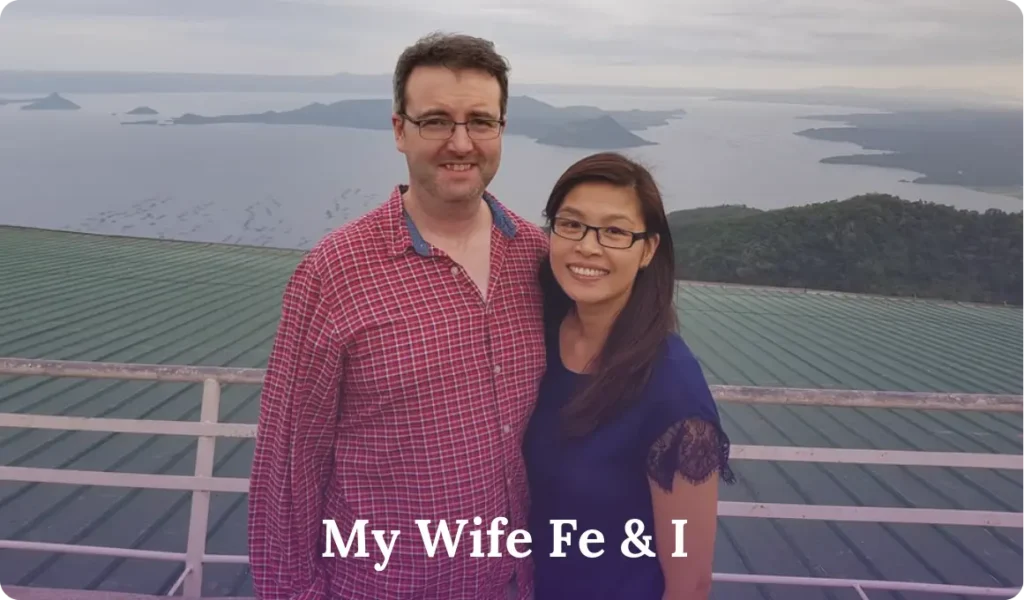
My wife Fe has been a Quantity Surveyor for eighteen years.
For the first ten of those, she watched contractors look past her at the male intern in the room when they were asked a question she’d been trained to answer.
What changed wasn’t that she got louder.
It’s that she stopped trying to describe her competence and started letting her work describe it instead.
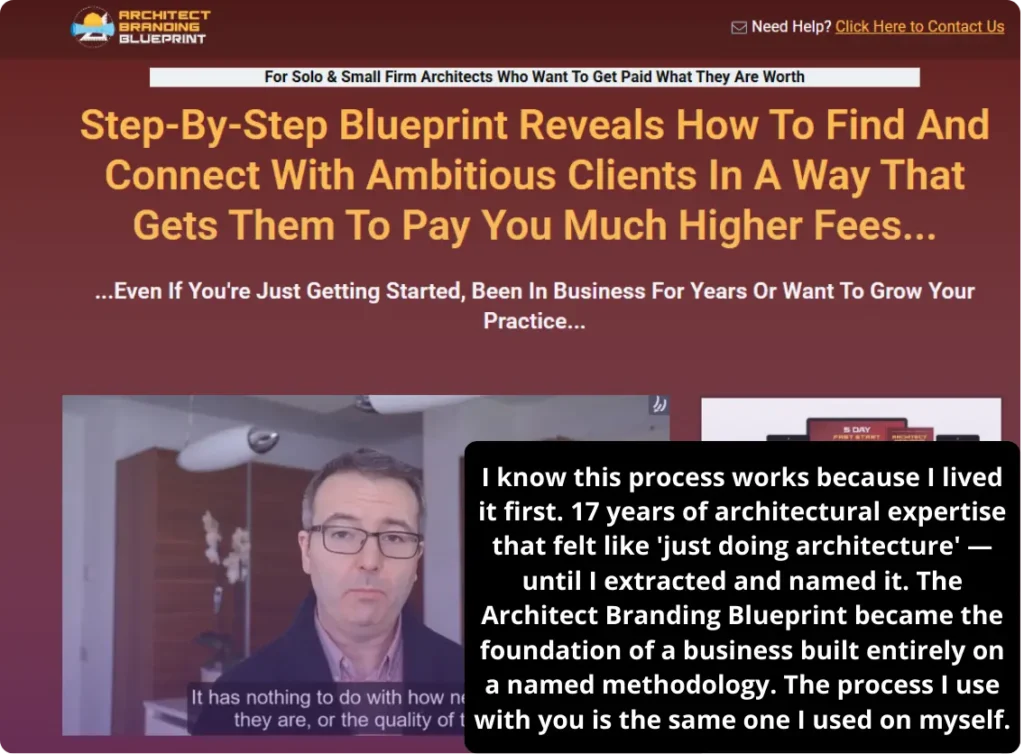
For seventeen years I’ve worked with architects, course creators, and service-led practitioners — many of them women with decades of depth behind them.
And the clearest pattern I’ve seen is this.
Experienced women practitioners — 40s, 50s, 60s, with decades of real transformation work behind them — are routinely overlooked by the market.
Not because the work isn’t deep.
It’s because the words that would let the market see the depth were never built.
And here’s the part that rarely gets named.
From the inside, it often doesn’t feel like depth. It feels like too many things.
You do the deep work, and the somatic piece, and the part nobody else thinks to do, plus a dozen quiet diagnostic moves you’ve never once written down.
And when someone asks what you do, you can’t find the single thread running through all of it.
So you reach for the broadest word you have.
That’s the first half of the problem, and it’s the half almost no one names: not that you have too little to say, that you have too much, with no structure to hold it together.
The second half of the problem is that the market then takes that broad word and files you as a generalist.
A practitioner carrying the expertise of three, read as “a bit of everything.”
Patricia felt it the day a former mentee, barely two years in, sent her a link, half proud, half oblivious: a sleek site, a named four-step framework, a waitlist.
The younger woman’s depth was a fraction of Patricia’s.
Her packaging was a generation ahead.
And Patricia caught herself doing the quiet arithmetic every experienced practitioner eventually does:
She charges nearly double what I do, for work I was doing before she qualified.
When Patricia said “grief counsellor,” people pictured the gentlest, most generic version of it, the same two words a beginner six months in would use.
Twenty-two years, filed under a label that carried none of it.
Her own colleagues, who knew her work was different, still couldn’t describe it well enough to refer it properly.
Two problems.
One cause.
The expertise is already there.
The methodology is already there.
What’s missing is the naming of it, the thing that lets the market see your depth without you having to explain yourself, again and again.
“I finally have words for what I’d been doing all along.”
Tarnia, Occupational Therapist & Strategic Intervention Coach [▶ 1 minute clip]
How To Be Visible Without Feeling Exposed
If the word ‘visible’ makes something in you tighten, read this part slowly:
Once the method carries your depth, it becomes the thing people evaluate.
Not you.
You stop being the one assessed in the room.
There’s one more thing about this work, and about the people drawn to it.
They tend to be the quiet kind.
The ones who do deep, private work and would never broadcast it.
You’ve probably been your own best-kept secret for years — not by accident, but because the loud version of visibility was never going to fit.
Your clients aren’t the type to shout about you from the rooftops — and neither, most likely, are you.
That kind of visibility repels the very people you want.
A named methodology is the other kind of visible: quiet, precise, something a reserved client can hand to one other person without it ever feeling like noise.
And here’s the thing almost every practitioner I meet quietly believes: that this is just her.
That everyone else has found the words and she’s the only one still reaching for them.
She hasn’t.
I’ve watched this exact pattern in hundreds of women — therapists, mediators, healers, facilitators — each one privately certain she was the only one.
Being invisible to the market is the most common thing in this room, and the loneliest, because everyone assumes she’s alone in it.
That’s why the goal here isn’t to make you louder.
The goal is to make you visible without being exposed, to let the methodology carry your depth into the world so the right people can find you, while you stay exactly as private as you’ve always been.
The method goes out and does the being-seen. You don’t have to.
That’s the work I do.
And that’s why I do it with this market specifically.
Now I want to get real about the value of a practitioners work:
“Seeing it broken down like that blew me away.”
Ursula, Counselor [▶ 1 minute clip]
The Transformation You Can’t See From Inside
The truest measure of your work isn’t a sentence about it.
It’s one client’s life, before you, and after.
Before we look at how this has worked for others, try something.
Think about one client.
The one who comes to mind first.
What were they carrying when they found you?
Not the diagnosis, their actual Tuesday morning.
What it was like to be them before your work.
Now think about where they were when they finished.
What could they do that they couldn’t do before?
The distance between those two points is what your methodology creates.
And the value of that distance isn’t something you have to argue for, your client already established it.
By how long they searched before they found you.
By what they spent on the things that didn’t work, long before they reached you.
This was always the part that undid Patricia.
People arrived at her door carrying grief they’d held for decades — the kind other practitioners had tried and failed to move, and they left able to live alongside it.
She produced that, again and again.
She just couldn’t see the size of the distance from inside it, so she never charged for it, and never named it.

And it doesn’t stop with them.
The partner who sleeps through the night now.
The colleague who noticed something had shifted.
The children who are calmer.
The family that feels different on a Sunday afternoon.
That’s the change travelling outward from one person, and you produced it, the same arc every time.
When something moves people that far, that consistently, you’re not running a service.
You’re running a method that works, even if you’ve never once called it that.
And people gladly pay thousands for exactly this.
The only thing standing between you and those people is that they don’t know you can help them.
Not because the change you create isn’t real.
Because the method that produces it has no name they can recognise.
No shape a referral can carry.
No sentence a potential client can hold long enough to think “that’s me.”
So the work stays in the room, reaching the few who happen to land in front of you instead of the many it was always for.
That’s the part that changes first.
Next, let’s look a bit closer at what changes when you can articulate what you do in a way the market understands, recognises and values:

What A Normal Week Looks Like With A Named Methodology
Nothing about your expertise changes.
The week around it does.
First, your referrals change.
Your colleagues don’t say “she’s really good — you should talk to her.”
They say: “She uses [Your Methodology Name].
It’s a four-stage process for people who’ve spent thirty years caring for everyone else.”
The person hearing this puts their fork down.
“That’s exactly where I am.”
They book a call that afternoon.
You weren’t in the room.
Your methodology was.

Next, your website changes.
The homepage doesn’t list modalities — which are the tools you use.
It doesn’t describe a “holistic, integrative approach.”
It walks through a named process, step by step.
The person reading it at 11pm on a Sunday can picture themselves inside it.
They can feel what changes.
So they bookmark it, and they come back the next morning, and they book a call with you…
The pricing conversation changes.
You say to your potential client: “It’s a four-stage process. Here’s what it costs.”
This time your voice stays level.
You don’t apologise.
They don’t flinch and then they ask about start dates.
The methodology took the question.
Not you.
Because the conversation isn’t really about defending your price anymore.
It’s about whether the process is right for them.
The work finally has enough shape that the fee makes sense on its own.

Here’s where the real opportunity here is.
It’s not more clients.
Not better marketing.
Not even better positioning.
It’s that the work you’ve spent years building finally becomes visible to you.
Because once you can see it, everything else becomes easier.
The right people find it.
Referrals get more consistent.
The practice gets steadier.
And the years you’ve spent developing the work finally start compounding, instead of resetting every time you meet someone new.
For some of you, this is about more than a steadier practice.
It’s the first time the work can travel.
A named methodology is something you can stand on, write from, teach from, build a body of work around.
Not becoming a different practitioner.
Just letting the thing you’ve quietly built reach further than one room at a time.
The work was always there.
The name is what lets it move.
So how do you actually do this?
Well, that’s what we’re going to look at next.
How We Do This
It asks almost nothing of you.
That’s exactly why it works.
You might have invested in programmes like this before, and nothing changed.
That’s a fair concern.
But those approaches worked on your branding, your content, your messaging, not the methodology underneath all of it.
They started from the assumption that you could already see your own method and just needed help dressing it up.
So they handed you a worksheet, a template, a set of prompts — and asked you to fill in your methodology yourself.
Which is the one thing you can’t do.
It’s the whole reason it didn’t work.
A template only works if you can already see the thing it’s asking you to write down.
And you can’t — not from inside it.
This is different.
You don’t fill in a template. You don’t learn a framework. You don’t build anything from scratch.
You show up and talk about the people you’ve helped.
And I do the part you can’t do for yourself — I listen from the outside, where the method can actually be seen, and I name it for you.

This is the part Patricia couldn’t have reached on her own, no matter how many templates she filled in.
So I asked her to do the only thing the session asks of anyone: tell me about your last five clients.
She talked for twenty-five minutes.
And the pattern she’d been running since her third year — the one she could never see from inside it — was sitting right there, in the way she described what she did.
One conversation later, it had a name.
It’s a conversation called a Methodology Mapping Session, and I’ll walk you through exactly what it is and what you walk away with in a moment.
First, let’s look at some of the results a Methodology Mapping Session achieves:
The Pattern Holds Across Every Kind of Practitioner
Margaret and Valerie work in completely different fields.
One shift reset both their practices.
You already know how this ends for Patricia.
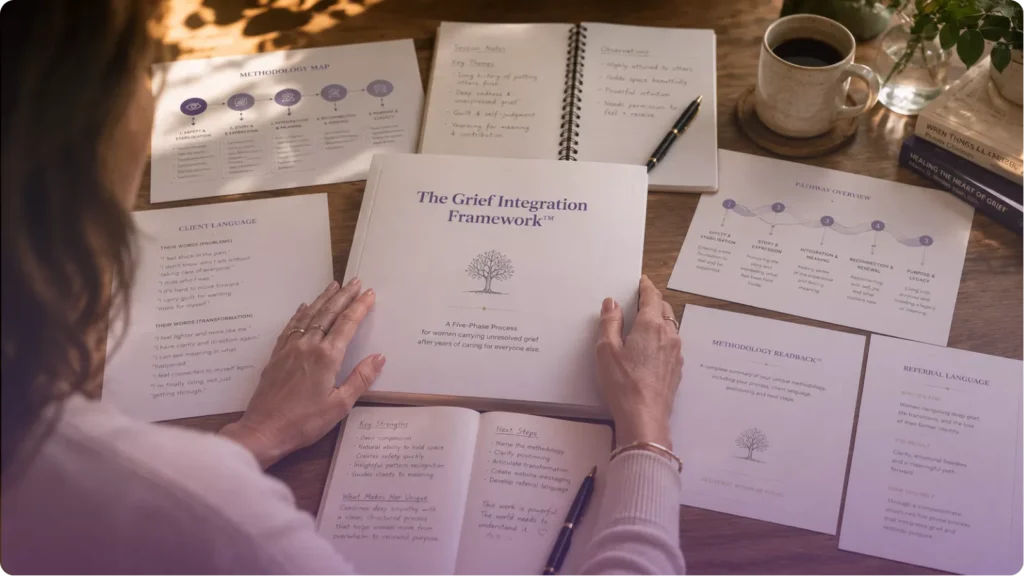
The methodology we named — The Grief Integration Framework — a four-phase process for women who’ve spent decades caring for everyone else.
Within thirty days the intake calls she dreaded changed: the ones that ended in “let me think about it” started ending in “when can we start?”
Where one in four used to book, three in four did.
Her fee for the same ninety-day work went from $800 to $3,000 — and her voice stayed level when she said it.
She even increased it again to $5,000 six months later.
Same expertise.
The only thing that changed was the structure around it.
What you might not expect is how little her field had to do with it.
The same shift resets practices that look nothing alike.

Margaret, 58 — Career Transition Coach, 18 years.
Margaret had reached the stage Patricia hadn’t yet: she wasn’t fumbling for words so much as quietly winding down.
Eighteen years in, she’d started to assume the best of her work was behind her…
…that the depth was all still in there, but she’d lost the way to reach it, and maybe that was just what late career felt like.
Before, she described what she did as “I help women find clarity in their careers.”
After, she had a name for it, The Reinvention Roadmap: a five-phase process for women who know something needs to change but don’t want to blow up their lives to figure it out.
And the thing she thought she’d lost access to turned out to have been there the whole time, just unnamed.
Same practice.
Same referral network.
But seven out of ten people who sat down with her started booking — up from one in ten.
“For the first time in years, I actually look forward to those calls,” she said.
“They stopped feeling like auditions.”

Valerie, 42 — Burnout Recovery Consultant.
Before, she couldn’t separate herself from generic consultants, and every first conversation ended with “let me think about it.”
After she named her process, The Sustainable Success Framework, those conversations started ending with “when can we start?”
Her fee went from $1,500 to $4,500.
“When someone asks what makes me different, I have an answer now,” she said.
“And they want to hear more.”
She wasn’t selling herself anymore.
She was describing a method.
And then something else starts happening.
Colleagues start asking: “How did you get so clear on what you do?”
Clients arrive already using her language — words she gave them.
The referral network stops sending “she’s really good” and starts sending “she uses The [Method Name].”
The world starts reacting to her instead of her reacting to it.
You might be thinking: “But my work is different. Too intuitive. Too unconventional. Too hard to pin down.”
That’s the most common thing I hear.
From every type of practitioner.
A somatic practitioner said it.
A spiritual director said it.
A yoga teacher trainer said it, to name but a few.
All now have named methodologies.
Next, let’s look at how you can have a named methodology too.
What The Methodology Mapping Session Is
Nothing to prepare.
Nothing to prove.
You bring the clients; I bring the outside eyes.
You talk about your clients — what they were dealing with, what you did, what changed for them, etc.
And I listen for the methodology.
It’s a conversation on Zoom.
Most take about an hour to get there, sometimes less, sometimes more, depending on how close you already are to it.
It’s not a strategy session and it’s not a sales call.
You won’t be put on the spot, asked to justify your work, or made to perform.
You’re not the thing being assessed — your clients are the subject, and the method is what we’re listening for.
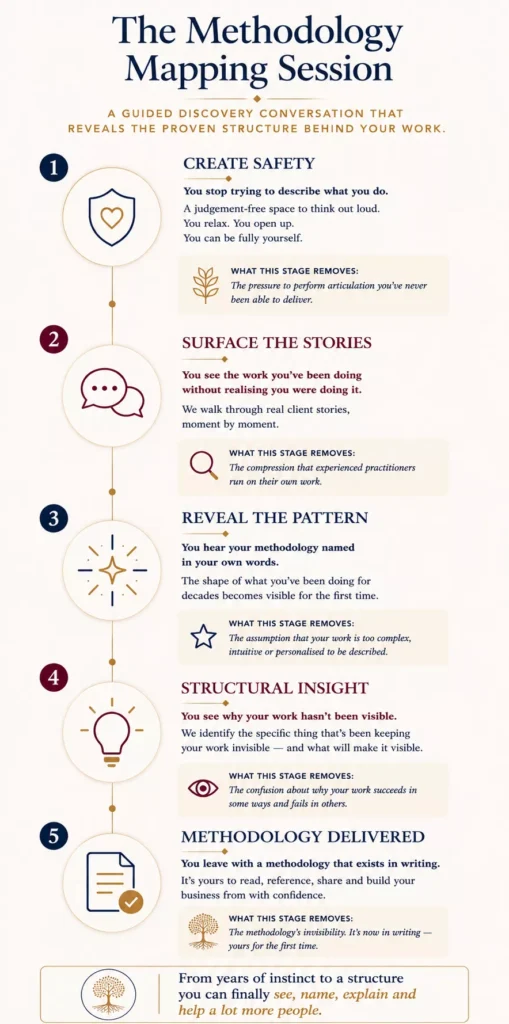
Most practitioners tell me afterward that the thing they dreaded — having to explain themselves, prove themselves — never happened.
They just talked about their clients, and the pattern surfaced on its own.
For the first twenty minutes, I’ll ask you about a few clients.
You describe what happened. I take notes, lots of notes which you of course get at the end.
And usually around the twenty-minute mark, I’ll say something like: “You just described the same pattern with three different clients. Did you notice that?”
Pause. Then: “I do that every time.”
That’s the moment most practitioners describe afterward.
It’s quiet. Not dramatic.
More like something you’ve always half-known finally becoming visible.
“How did you do that? That’s the thing I could never put into words.”
Rosalind, Spiritual 12-Step Guide, New Zealand [▶ 2 minute clip: the moment she hears it said back to her]
What You Walk Away With
By the end of the session, you’ll have watched your methodology emerge in real time.
Within the next 48 hours, everything we’ve uncovered is organised and sent back to you.
You don’t leave with vague insights or pages of handwritten notes.
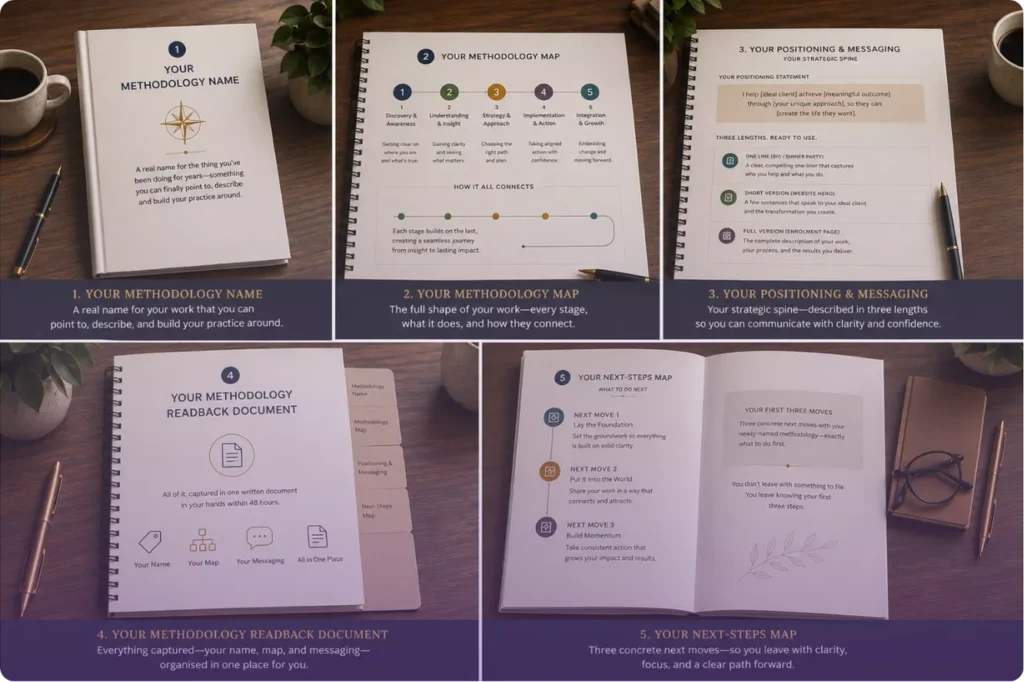
Here’s what you’ll be holding — and what each piece lets you finally do.
1. Your Methodology Name:
A real name for the thing you’ve been doing for years—something you can finally point to, describe and build your practice around.
So the next time someone asks what you do…
…instead of the long, winding explanation that loses them halfway, you say one phrase — the name of your method — and watch them lean in and ask, “what’s that?”
That’s the moment the name gives you: the question stops being something you dread and becomes the door you walk people through.
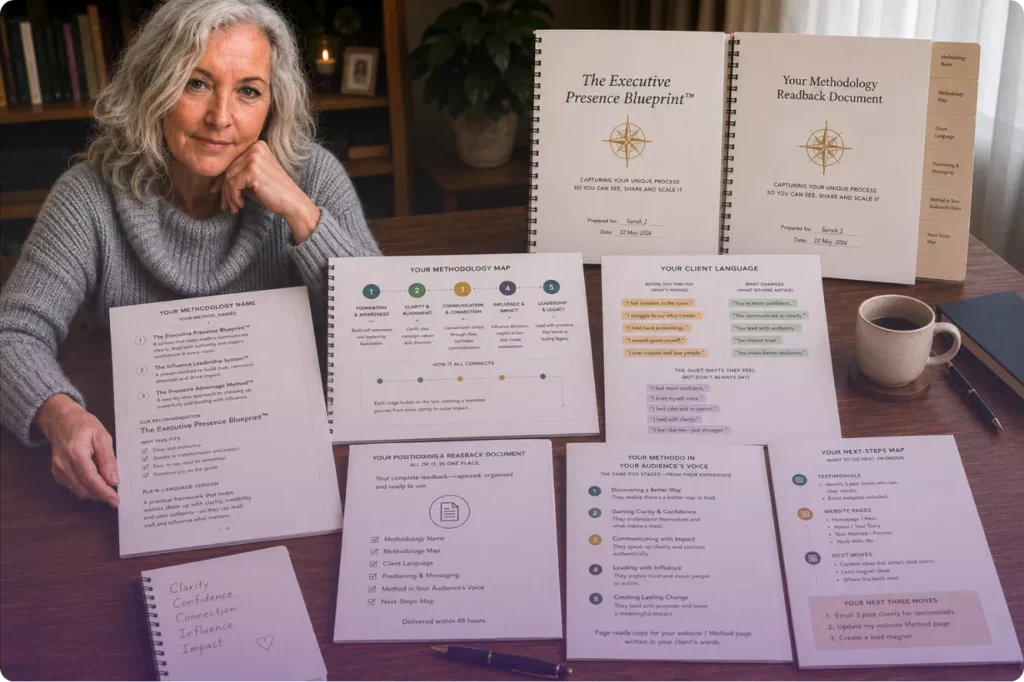
2. Your Methodology Map:
The full shape of your work, plotted out in your own language — every stage, what it does, how they connect.
This is the one you’ll read and feel something settle.
For years you’ve sensed there was a structure under what you do, but you couldn’t stand far enough back to see it.
Here it is on the page, the thing you run on instinct, finally visible to you.
Once you see it you’ll think:
“That’s it. That’s what I’ve been doing all along, and it’s real.”
3. Your Positioning & Messaging:
This is the one that lets you answer “What do you do?” without searching for words.
It’s the strategic spine of how you describe your work plus that description written out, ready to use, in three lengths.
This is the one that ends the struggle that probably brought you here.
First, a single positioning statement: the one true sentence about who your work is for and what it does, so you never have to invent your message from scratch again and everything you write checks against it.
Then it’s written out for you in the three lengths you actually need: one line for your bio and the dinner-party answer, a few sentences for your website hero, and a full version for your enrolment page.

4. Your Methodology Readback Document:
All of it, captured in one written document, in your hands within 48 hours.
So none of what surfaced in the conversation evaporates the moment the call ends.
You’ll have the whole thing — your name, your map, your language, your messaging — in a single document you can return to whenever you sit down to write, refine, or explain your work.
You don’t have to remember it or rebuild it.
It’s written down, it’s yours, and it’s there for good.
And one more thing— included, but not on the headline, because it lands better as a surprise.
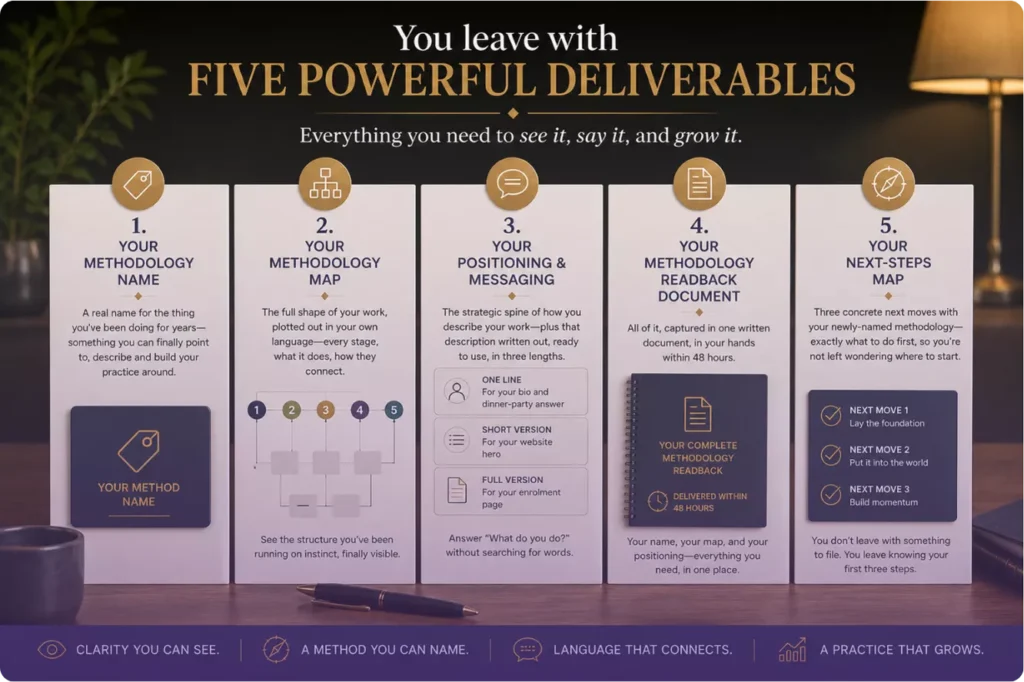
5. Your Next-Steps Map:
The readback doesn’t stop at “here’s your method.”
It gives you three concrete next moves with your newly-named methodology, exactly what to do with it first, so you’re not left with a beautiful document and no idea where to start Monday morning.
You don’t leave with something to file.
You leave knowing your first three steps.
None of these assets exist in isolation.
Together, these aren’t just a set of tools to go away and use.
They’re the proof — in writing, in your hands — that what you’ve been doing for years was never improvised.
It had a structure.
Now you can see it, and so can everyone else.
The Methodology Mapping Session isn’t simply a conversation.
It’s the moment years of instinctive expertise stop feeling like luck and start being something you can see, name, and stand on with confidence.
The way practitioners tend to put it afterward is some version of the same two sentences: you gave words to the thing I could never name — and, more quietly, I realised I hadn’t been winging it after all.
From that point on, your methodology answers the question before you ever walk into the room.
“I came in expecting a chat. I left with the shape of my whole practice.”
Simone, Stress Mastery Consultant, Canada [▶ 90 second clip: the moment it became something else]
The Investment
One quick comparison before I tell you the price.
Most marketing and positioning projects at this level — methodology mapping and naming, written framework, market-ready language — run between $3,000 and $10,000 with a branding agency.
And that’s just for the words.
Then they hand you a template and ask you to fill in your own method, from the inside.
Which is the one thing you can’t do.
It’s the whole reason you’re here.
You can’t read the label from inside the jar, and a template only ever works from inside the jar.
That’s the difference here.
I don’t hand you a template and ask you to surface your own methodology.
I sit with you, listen from the outside — where it can actually be seen — and describe it for you.
The reason that works is the same reason the template fails:
The method can only be seen from outside the work.
The investment for the Methodology Mapping Session (MMS) is $385 USD.
Three hundred and eighty five dollars.
This is the first step.
It’s the foundational part of what we do here in Courses Into Clients and we want to make it as accessible as possible.
“They call me the fairy godmother. I could never tell you how it works — now I can.”
Kerry, Leadership Coach, Institute of Managers and Leaders, Australia [▶ 3 minute clip: what’s actually behind the fairy godmother]
The Guarantee
You’re allowed to wonder if you’re the exception.
That’s the exact worry this removes.
If you don’t walk out with a named process and the deliverables I just described— you get a complete refund.
And if you’re sitting there thinking, “What if I don’t actually have a methodology?”
That’s exactly why I’m comfortable making that guarantee.
In all the practitioners I’ve worked with, I’ve never found someone with years of client results and no methodology.
What I’ve found are practitioners who couldn’t see it because they were standing inside it.
But if there’s genuinely nothing there to surface, I’ll happily give you your money back.
No forms.
No strange conditions.
No conversation about it.
The work is two-sided.
The guarantee is too.

Who This Is For
A short list below.
See how much of it you’ve already thought, in almost these words.
This is for you if you’ve been practising for five or more years.
You have clients who describe your work with more precision than you can.
And your clients’ lives change because of what you do — you just can’t explain how.
You’ve looked at your own website and thought: “This could be anyone.”
If you do deep work but the market can’t see what makes you different…
…your content sounds generic…
…your website sounds like every other practitioner…
…your conversations end with “let me think about it,”…
…the people who need your work can’t find you…
…and if part of you has been protecting yourself from being too visible, too exposed, too easily judged — even though you can’t quite articulate why.

And maybe there’s one more thing.
For some of you, the work feels close to sacred.
What happens between you and a client is tender, sometimes holy — and naming it has felt like it might cheapen it.
Reduce something that lives in candlelight to a tidy phrase on a website.
I want to honour that instinct, because it’s pointing at something true.
But staying unnamed doesn’t protect the sacredness.
It hides it.
A name isn’t a reduction, it’s the form that lets the right person, the one who’d treat this work with the same care you do, recognise you across a crowded field.
This conversation was designed for exactly that.
Once the methodology has a name, the gap between what you do and what people see — closes.
“I get five different answers when people ask what I do. Now there’s one.”
Carla, Facilitator, Published Author & Storyteller, 13 years in practice [▶ 3 minute clip: the moment five answers became one]
Who This Is Not For
If you’re in your first year or two of practice and haven’t yet developed a consistent approach across clients, the methodology may not be fully formed.
That’s not a failing.
You can’t harvest before the roots are down.
This works best with five or more years of practice.
If you’re looking for someone to manage your marketing — run your ads, plan your content calendar — that’s a different service.
This is about naming the methodology underneath all of that.
The thing your branding, your messaging, and your website all depend on.
And if part of you is thinking “I should have done this years ago — maybe it’s too late” — the methodology doesn’t expire.
It refines.
Practitioners with twenty or twenty-five years don’t have less to work with; they have more — deeper patterns, more evidence, and a naming that comes faster because of it.

And if the thought underneath all of this is “maybe I just need another certification first” — you don’t.
A certificate says you completed someone else’s curriculum.
A named methodology is the thing you built yourself, out of years of real results.
That makes you self-certified.
And the market reads a named method, not another set of letters after your name.
And if part of you worries that naming your method means claiming something that isn’t yours — that instinct is a good one, and it’s worth being precise about.
Naming your methodology doesn’t claim ownership of your field’s traditions — the techniques, the lineage, the things you were taught even by someone else.
Those stay exactly what they are, and you’d never want it otherwise.
What gets named is your synthesis: the particular way you combine, sequence, and transmit it — built over decades, that no single teacher handed you.
That through-line is genuinely yours.
And the most credible named methods honour their lineage openly.
Acknowledging where you trained doesn’t weaken your authority.
It deepens it.

In over 200 Methodology Mapping Sessions — with coaches, therapists, counsellors, mediators, facilitators, healers, and practitioners working in traditions most business people have never heard of…
The methodology has always been there, and always more sophisticated than she thought.
And once you have your process named and described?
The market, the same market that couldn’t see them last month, starts responding before they’ve even finished updating their website.
The methodology does what no amount of explaining ever could.
It will allow the market to see your depth — without you performing it.
It will enable the people who need your work to find you — without you chasing them.
It will free you from the exhaustion of trying to make yourself understood.
It makes you visible as who you already are.
“Forty-five years — and the first time it’s had a shape I can name.”
Resa, Family Mediator & Therapist [▶ 2 minute clip]
Book Your Methodology Mapping Session
“Don’t even hesitate for a second.
Honestly, when I booked it I thought — he’s going to have his work cut out with me, it’s just so nebulous.
Afterwards, I feel quite liberated. I’m a bit speechless, one, that you managed to elucidate it, and two, that you got it all down. My God, I can’t thank you enough.”
— Jacque, yoga teacher trainer, UK
If you’ve read this far and part of you is thinking “I’m not quite ready yet” — I want to say two things.
First: that’s a completely reasonable thing to think. It makes sense. It feels responsible.
Second: not one of the practitioners on this page felt ready when they booked.
Every single one of them told me some version of the same thing afterward:
“I wish I’d done this sooner.”
The readiness you’re waiting for doesn’t come from more preparation.
It comes from having the methodology named.
You can’t feel ready for the thing that creates the readiness.
You might close this tab and come back to it tomorrow. Most of them did.

Before you do, picture one conversation you’ll never hear.
One of your best clients — the one whose life genuinely changed — is at lunch with a friend who’s struggling with exactly the thing you’re brilliant at.
And your client wants to refer you.
She opens her mouth to.
And what comes out is: “I see this woman… she’s really good… I can’t quite explain what she does, but she helped me a lot.”
The friend says “oh, nice,” and the moment closes, and the name that would have changed that friend’s year never gets said.
Your best advocate, unable to advocate — not for lack of love, for lack of language.
That conversation is happening somewhere right now.
The only thing missing from it is a sentence.
That’s what the Methodology Mapping Session gives you.
Picture the other version once more.
Someone asks what you do.
And for the first time, you have a sentence that makes them want to hear the rest.
A colleague messages you about your website.
A referral arrives already using your words.
The market starts responding to your methodology the way your clients already respond to your work.
Visible — without being exposed.
Because the methodology takes the scrutiny now.
Not you.
And one last thing, because it matters to the kind of person who reads this far.
There’s no countdown on this page.
No “only three spots left,” no price that jumps at midnight, no pressure of any kind.
That’s not how this works, and it’s not how I’d want to be sold to either.
When you’re ready, you’re ready — and the methodology will still be there to surface.
There’s nothing to prepare. Nothing to get right.
You just show up and talk about the people you’ve helped.
In your corner,
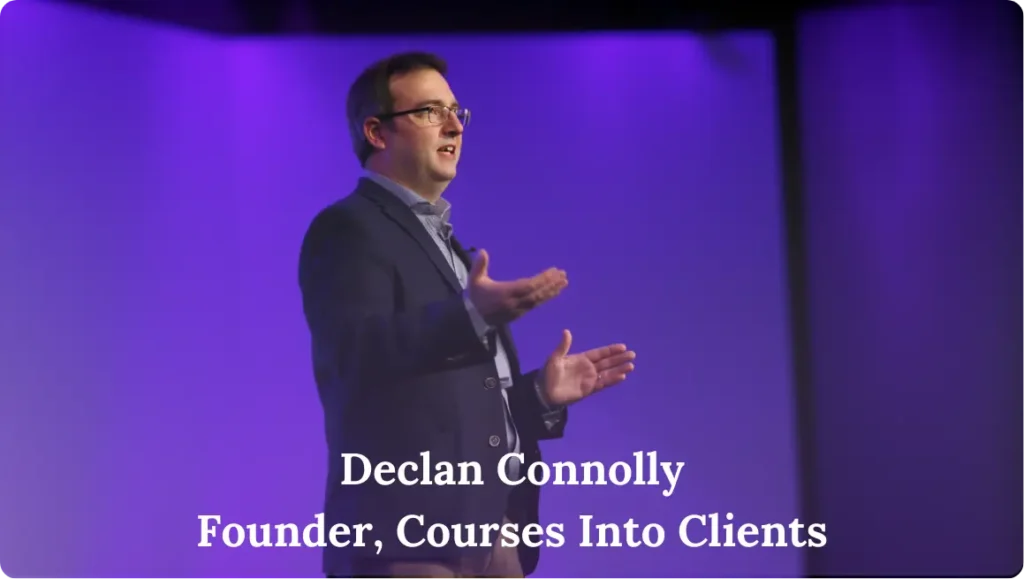
Declan Connolly
Founder, Courses Into Clients
Revealing and naming the methodology already present in your work — so the people who need you can find you.

P.S.: The Methodology Is Already There. It's Just Waiting To Be Seen.
Think about your last three clients.
The pattern that appeared across all three — the sequence you followed, the diagnostic moves you made.
If you can feel it but can’t name it, you’ve just put your finger on the exact gap this conversation resolves.
The session is where it gets named.
This site is not a part of the Facebook website or Facebook Inc. Additionally, This site is NOT endorsed by Facebook in any way. FACEBOOK is a trademark of FACEBOOK, Inc.
Legal Disclosures
RESULTS DISCLAIMER:
The testimonials and case studies presented are from real clients who completed the methodology mapping process. However, individual results vary.
The FTC requires us to disclose that:
– Individual results will vary based on your practice area, years of experience, existing client base, level of implementation, and
other factors
– We make no guarantees regarding your income, client acquisition, or pricing outcomes
– The methodology mapping process produces a named methodology, written framework, and positioning language. Business results
downstream of those deliverables — including pricing changes, client acquisition, and revenue — depend on your implementation
and market factors beyond our control – The pricing changes and client results shown in testimonials reflect those specific practitioners’ experiences and may not reflect yours
– As with any professional investment, there is no guarantee of specific financial outcomes
TESTIMONIAL DISCLAIMER:
The testimonials shared on this page are real experiences from practitioners who completed the process. However:
– These results are not typical or guaranteed
– Your results may differ depending on many factors including your practice area, existing reputation, client base, implementation,
and market conditions
– We cannot and do not guarantee you will achieve any specific pricing, client acquisition, or revenue outcome
– Past client results do not guarantee future results
For details, contact: support@coursesintoclients.com
SUPPORT:
For customer support, questions, or refund requests, contact:
support@coursesintoclients.com
Average response time: 24-48 hours (usually much faster)
FACEBOOK DISCLAIMER:
This site is not a part of the Facebook™ website or Facebook™ Inc.
Additionally, this site is NOT endorsed by Facebook™ in any way.
FACEBOOK™ is a trademark of FACEBOOK™, Inc.
COPYRIGHT:
© 2026 Courses Into Clients. All rights reserved.
No part of this material may be reproduced or transmitted in any form without written permission.