
Need Help? Click Here To Contact Us
For Experienced Practitioners Whose Expertise Is Obvious In The Room And Invisible Outside It
How to Get Your Work Recognized And Chosen
Without Ever Having to "Sell" It
Your clients already know what you’re capable of.
This is how the right people find that out before you ever say a word.

You Don't Need To Reinvent Your Method: You Just Need To Make The One You Already Use Visible
You might be here because some part of Patricia’s situation is your situation right now.
There’s something you might be in the middle of.
Maybe it’s a website that’s been half-rebuilt for months.
Or a program you’re assembling and can’t explain why these particular pieces belong together.
Maybe a launch, a retreat, a training, a proposal.
Or a price you’ve decided to raise and can’t yet justify out loud.
Whatever it is for you, here’s the good news: none of that was wasted.

It’s all simply waiting on one thing: a single sentence that describes what makes you different, and doesn’t sound like everyone else in your professional category.
And that sentence is the one that describes the methodology you already use underneath your work.
Your methodology is the repeating way you work with clients: the sequence, the turns, the decisions you keep making after years of training and experience have been synthesised into practice.
It isn’t any single modality you were taught. It’s what you do with all of them, visible across your client work.
And that’s something no one else can emulate or copy.
That’s what really makes you unique and no amount of fancy words or rework reaches that layer until it has been surfaced.
But why is it so hard to see and explain?

Why You Can't See Your Process From Where You're Standing - The Invisible Expertise Pattern
Think about the last time you heard a recording of your own voice.
Most people flinch.
Not because the voice is wrong.
But because it is not the one they hear from inside their own head.
From inside, it sounds normal.
From outside, it is unmistakable.
You have not been speaking wrongly for years.
You have been hearing yourself from the only position that cannot hear what everyone else hears.
The same thing happens to a method.
From inside the work, it feels like intuition, or responding, or “just what I do.”
From outside, the same moves are specific, repeatable, and obvious.
Clients feel them.
You are the one person who cannot hear them cleanly. and that is not a gap in your expertise.
It is the position you are standing in.
A website renders a description. It cannot produce one.
And yours may not exist yet as words, except as decisions you have been making without deciding them, one client at a time, for years.
With your clients, your expertise is obvious.
Outside of that, nobody can see it.
Doing the work that well for that long is what puts the method out of reach of words.
This is the Invisible Expertise Pattern.
And you can check this yourself, see whether any of these are true:
- Your clients can describe what changed for them more clearly than you can explain how you created the change.
- You know exactly what to do when a client is in front of you, and go blank when someone asks you to explain your process.
- You would recognise your own method the moment someone laid it out in front of you. Not because it was new, but because it was already yours.
If even one is true, the problem may not be that you lack a method.
It may be that you have been looking for it in the wrong place.
Until that is revealed, the market will keep filing you alongside everyone who uses the same title, because the words on the outside cannot tell you apart yet.
And if you think you don’t have a method driving your work, well you’re not alone:

"I Don't Think I Have a Method." Watch What We Found When We Looked With These Other Practitioners:
“I was certain I didn’t have a method. Then I saw it.”
Rosemary, Spiritual & Intuitive Healer, 20 years in practice [▶ 30 second clip]
“I have no clue what I’m doing. It seems to work.”
Rosalind, Spiritual 12-Step Guide, New Zealand [▶ 2 minute clip: the moment she hears it said back to her]
“I do have a process that I do because I didn’t think I had one before. I just thought I was making it up as I went.”
Tarnia, Occupational Therapist & Strategic Intervention Coach [▶ 1 minute clip]
Why I Do This Work
I trained as a structural engineer.
The job is to look at something complex and find the system underneath that’s actually holding it up.
Later I founded a home-design practice, Bespoke Home Design.
We designed individual homes around the people who’d live in them: their routines, priorities, constraints, ambitions.
Every house was a different problem because every family was.
I could do that work. I couldn’t explain it.
One evening at a dinner party I was introduced to an architect. He asked what I did.
“I design homes,” I said.
He looked at me and said, “That’s not real design, is it?”
I was insulted but at the same time realised I’d left the judgement open to him.
All I had given him was years of training and design decisions, compressed into three generic words to evaluate.
If an architect could dismiss the work from that sentence, what were potential clients thinking when they saw it?
If I couldn’t articulate how I was different and valuable, I couldn’t expect anyone else to see it either.
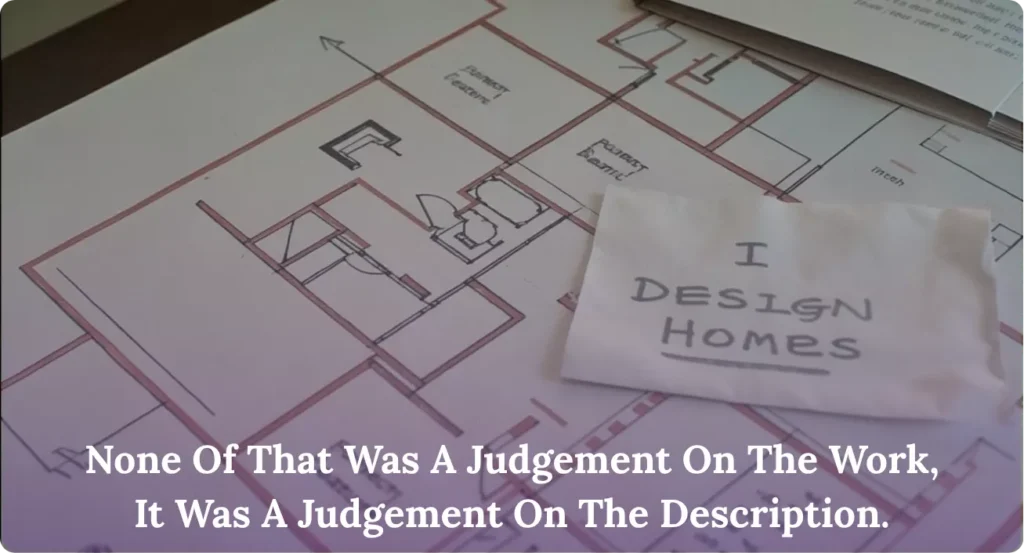
So, I went home and asked a different question.
Not “how do I sound more impressive?”
But what do I actually do, in order, every time, that makes a design work for this family and not that one?
I wrote it down.
The sequence was already there and I had been running it for years.
Yet, I had never once said it out loud as a method.
Once I could describe that, the conversation changed.
I was no longer “someone who designs homes.”
I was someone with a specific process for a specific kind of problem.
People stopped comparing me only on price, because there was suddenly something to recognise.
This lead to higher fees, more clients, and bigger projects.
My work had not changed. The description had.
And the description is what the market had been using to decide.
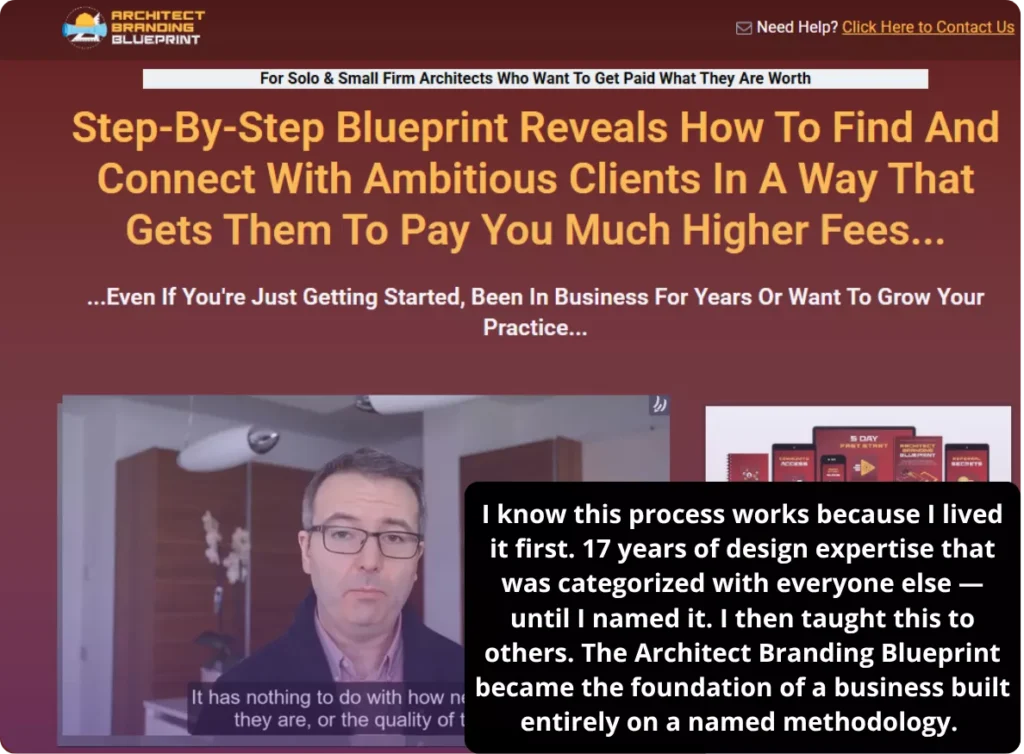
Once I had my breakthrough, I then started teaching architects how to explain what made their practices different.
And I eventually transitioned away from home design completely into working with practitioners like coaches, consultants, therapists, mediators, facilitators, etc…
I’ve since done this with 241 practitioners at the time of writing this: therapists, mediators, counsellors, occupational therapists, yoga teachers, healers, some with thirty years behind them, some with a lot less than that.
Not one could see their underlying methodology unaided.
What I listen for isn’t the techniques you’d list on a website.
That doesn’t move the needle.
It’s the moves underneath them: what you notice first, the turn you engineer, the decision you keep making without deciding it, the thing you nearly leave out because it seems too obvious to mention.
That last one is usually where the method is.
Those decisions are invisible from the inside for the same reason you can’t describe pulling away on a hill in your car.
They’re not gone. They’ve moved somewhere words don’t reach.
An outside ear finds in an hour what years of doing the work never surfaces.
And once you have a named methodology, your practice starts moving in the direction you want it to go:
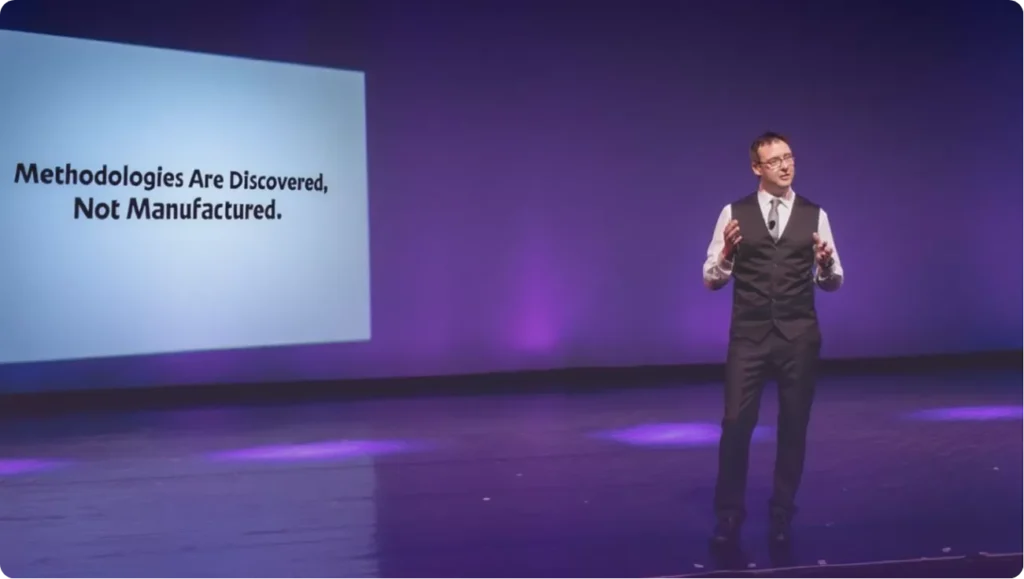
What Changes When You Have A Method People Can Recognize, Understand, And Value
Nothing about your expertise changes.
What changes is everything else.
Your Referrals:
Someone you have never met is at dinner with a colleague of yours, describing a problem she has carried for years.
Instead of “you should talk to her, she’s wonderful,” your colleague says the name of the thing you do, and the few words that describe who it is for.
The stranger puts her fork down, and says:
“That is exactly where I am.”
She books before the weekend.
You weren’t in the room.
What you do had a name, so it could travel without you.

Your Fee:
“It’s a four-stage process. Here is what it costs.”
You say the number, and then you stop talking.
No throat-clear, no softening clause, none of the “but of course we can look at that” you have heard come out of your own mouth more times than you would like.
The client doesn’t flinch.
They ask when you can start.
The method took the question, not you.
And you never had to put yourself on display for any of it.
The work does the visibility job so you don’t have to.

Your First Conversation With A Potential Client:
You are no longer trying to explain how you work and hoping they ‘get’ it.
Instead, you are describing a process, and they are recognising themselves in it.
The conversation moves from “convince me” toward a more useful question: “is this the right process for me?”
Your Website:
Not another rewrite of the same broad promise.
Instead, it had one paragraph that shows a method, so a stranger can tell, in a few seconds, whether they are in the right place.
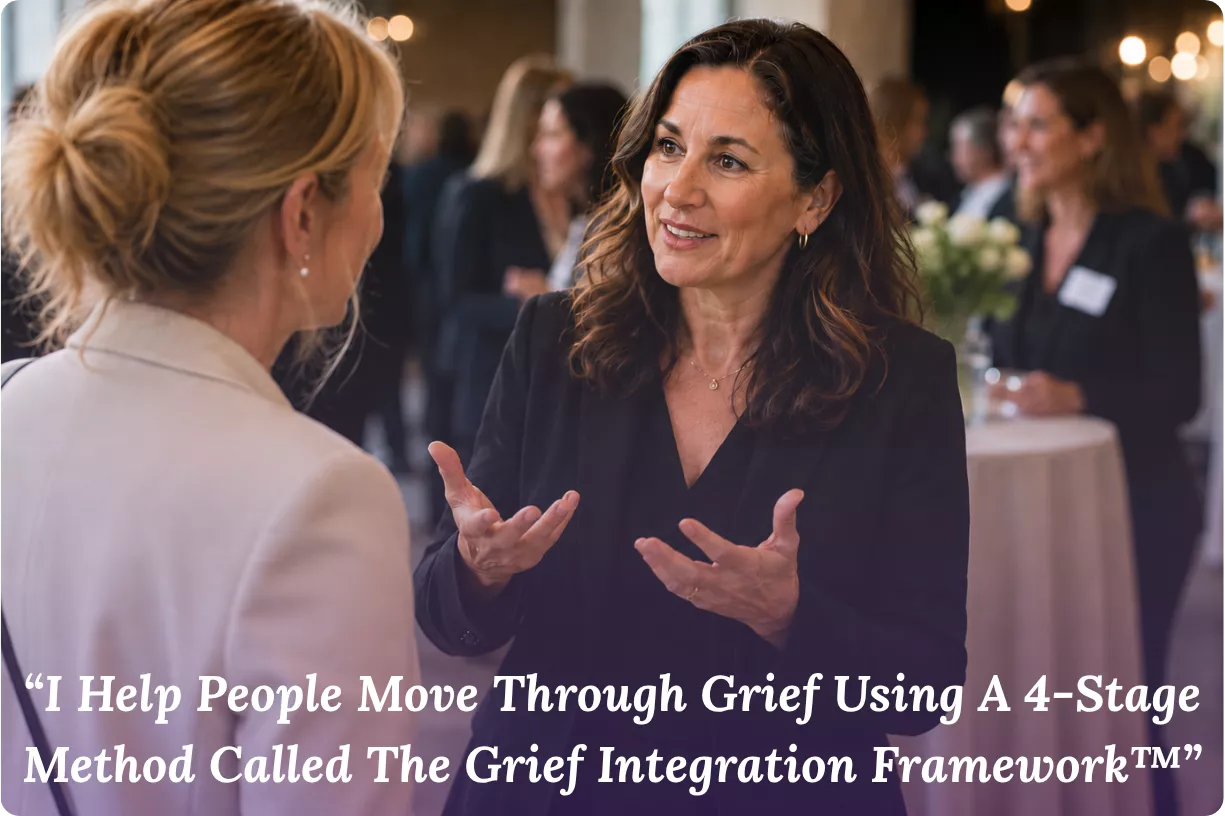
Here’s How A Methodology Makes You More Visible:
Nowadays, people look for a specific kind of help, not a profession or job title.
Your process names their problem and gives them a process they can recognize themselves in.
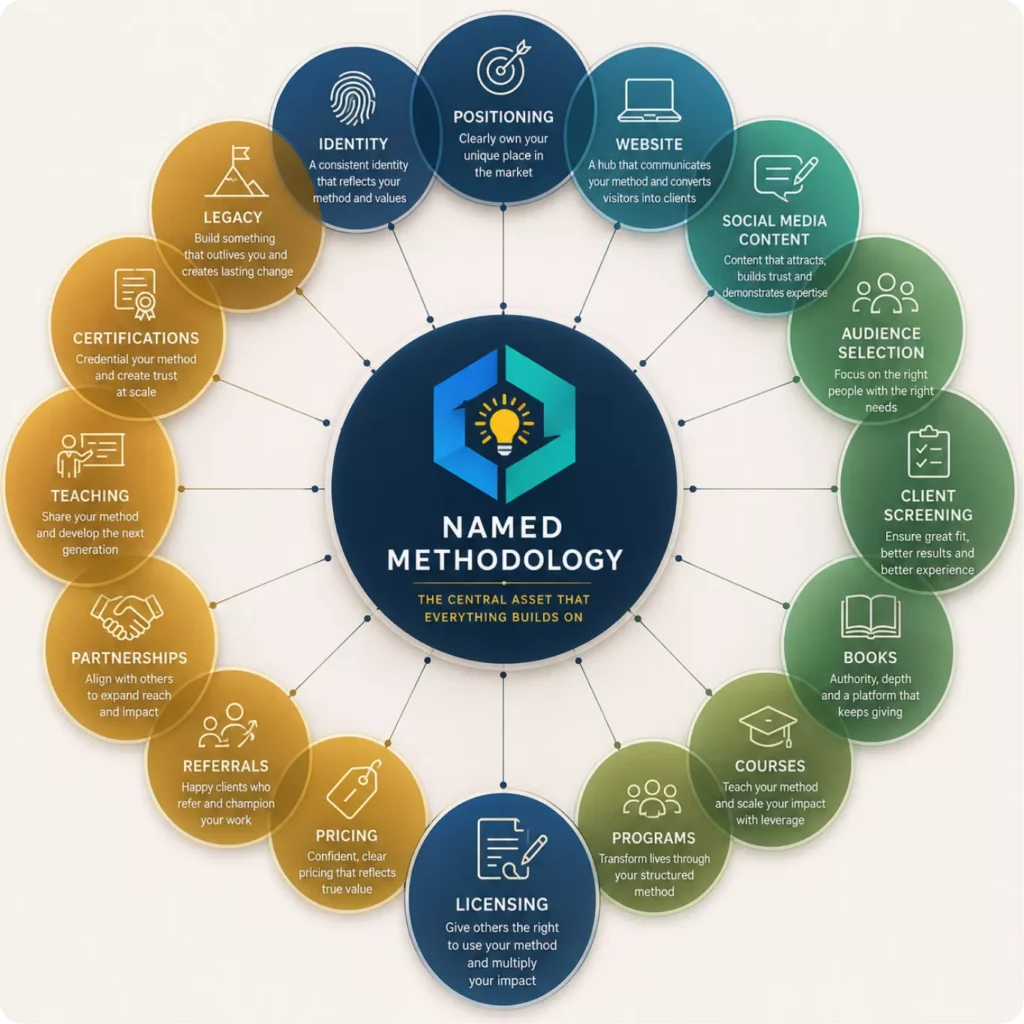
And from there, everything you make from then on has a spine.
Your Instagram posts, Linkedin profile, lead magnets, Google search results, etc, what someone finds when they look for that kind of help.
None of them start from scratch, because they all start from the same structure.
And it’s your work that does the visibility work so you don’t have to, if you so choose.
With a named methodology, the depth of your work is finally visible to the right people.
However, before we get to all that, we need to ask whether there is evidence worth naming in the first place:
Find The Evidence Of A Method Already Operating Beneath Your Work
You already know how this works, because it is how you work with clients.
You would never prescribe before assessing the client and their situation.
You gather their history, watch what presents, look for what repeats, and only then decide what you are actually treating.
A method is found the same way.
Not by trying to word it, which is where every rewrite started and why none of them held.
But by gathering the evidence first.
So before anyone names and describes anything, there is one thing to look at: where your professional judgment repeats across real client cases, and where those cases diverge.
Introducing The Market Recognition Sprint
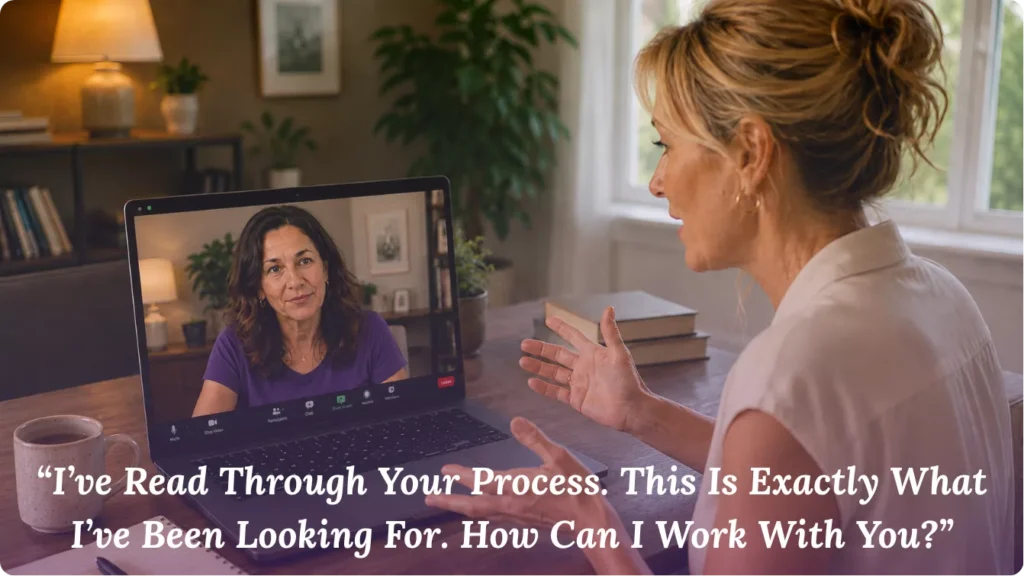
Patricia’s method got a name, and the repricing, the inbound leads and the right clients followed.
This is the step before that.
The Market Recognition Sprint is a one-hour workbook that shows you, in your own handwriting, whether the method is already there.
Price: $27.
Instant download. Start whenever you like.
NOW AVAILABLE FOR INSTANT ACCESS

What Happens Inside It
You work from three people you have already helped.
For each, you answer a short set of questions.
Not the techniques you would list on a website, but the moves underneath them: the thing you did first, the turn you engineered, the decision you kept making without deciding it.
Then you read your own answers back, side by side.
By the last page, you can see what your three cases actually support: where your judgment repeats, where the cases diverge, and what is still unresolved.
You will finish holding evidence of whether there is one to name.
It works both ways.
If you are not sure you have a method, it surfaces what repeats.
If you have too many tools and no thread, it shows you honestly whether one runs through, without forcing your cases to agree.

And If There Turns Out To Be Nothing There?
That is the real question, isn’t it.
Not the $27.
The quiet one underneath it.
If your three cases genuinely diverge, the workbook tells you, and shows you where.
It will not manufacture a pattern you do not have.
That is not the workbook failing.
That is the workbook working, and it is a more useful thing to know than another year of wondering.
And if you finish holding nothing you did not already know, email me within 30 days and I will refund you.
No form, no explanation.

Where It Stops,
And Why It's $27
The workbook does one thing completely: it helps you gather and compare the evidence from real client cases.
It will not name your method or map it for you.
It is the same reason a surgeon does not operate on herself.

She can record her symptoms, review her history, and recognize that something is happening.
But what she can’t do is perform the operation on herself.
Evidence first, architecture second.
The price reflects that scope.
It’s the whole of the first job, not a sample of a bigger one.
Who This Is For
This is for practitioners who have successfully worked with clients yet, those clients describe their work better than they can.
It’s for practitioners who have already built something, be it a programme, a cohort, a referral network, a site people actually land on, etc…
…and can feel there is a method under it that has never been named.
If you can already picture what you would change on Monday once you had a named methodology, you are who I built this for.
An hour from now you could be holding the answer to a question you have carried for years.
In your corner,
Declan Connolly
Founder, Courses Into Clients
Revealing and naming the methodology already present in your work — so the people who need you can find you.
P.S. If you have been telling yourself the next rewrite will be the one that finally sounds like you, it won’t.
Every rewrite starts from the same place, and the place is the problem.
Not the words.
And it starts with finding evidence that there is a method beneath your work.
That method is the depth of it.
Frequently Asked Questions
Need help? support@thepremiumpractice.com
- "Do you have proof from practitioners in my situation?"
Yes, and it is worth being precise about what it proves.
The clips on this page are from a longer session, a Methodology Mapping Session, not from this workbook, which is new enough that it does not have its own testimonials yet.
That is exactly why it has a no-questions refund.
What the clips show is the premise: that a real method turns up, again and again, the moment someone looks from outside.
- "Isn't this just what I already learned from my training / my mentors / my modality?"
Fair question, and it’s worth separating clearly, because the honest answer is: your training is not the methodology, and neither is any single modality you were taught.
Take a Hogan personality profile, or an EMDR protocol, or a somatic technique, or any certification you hold.
Those are licensed tools, built by someone else, and you’re right that you didn’t invent them. Nobody’s claiming you did.
The methodology is something else.
It’s the specific sequence in which you deploy those tools, the moment you reach for one over another, the thing you notice first with every client regardless of which tool ends up getting used, the turn you consistently create, the thing you deliberately refuse to do even when your training would say to.
None of that is written down in any certification manual.
It’s not what you were taught.
It’s what you built, over years, by running what you were taught through thousands of real decisions with real people.
Here’s a concrete way to tell the difference.
If two practitioners were both trained in the exact same modality, by the exact same teacher, they would still work differently with a client in the room.
That difference, the specific thing that’s yours and not your teacher’s, is what gets named.
The modality is the material.
The methodology is what you do with it.
That’s also why this isn’t extracted from what you learned, or from a list of your qualifications.
It’s extracted from real cases, evidence of what you actually did, not a description of where you trained.
If the pattern we find turns out to just be a restatement of someone else’s model, we’ll say so, plainly.
That’s never happened yet.
But the honest test is always the evidence in front of us, not your CV.
- "I already have a name for my work."
A name is not the same as a mapped method.
Plenty of practitioners have a name and still cannot explain what happens inside it, which is why the name alone did not change the referrals or the enquiries.
The name is what the structure produces.
Without the structure underneath, it is a label on a box no one can see into.
- "How is this different from every branding exercise I've tried?"
Every branding exercise started by asking you to describe what makes you different, which is the exact thing you cannot reach from inside.
This never asks you to describe your work.
It starts from what you actually did with three real people and works backwards.
You are not producing language.
You are producing evidence.
- "Is this the first rung of a ladder?"
Not in the way you’re worried about.
The workbook delivers its full result on its own: evidence of where your judgment repeats, and where it doesn’t.
Nothing needed to finish it is held back.
If you later want help naming and mapping what you find, that’s a separate session but nothing here depends on it, and nothing about this purchase opens a ladder you have to climb.
- "Why is this called 'Courses Into Clients'?"
That’s the original name of the business, from an earlier course-creation model.
What I do now grew out of it, but isn’t that: I sit with experienced practitioners, listen to how they actually work, and help surface the methodology already there.
No course-building programme is attached to this purchase.
Legal Disclosures
RESULTS DISCLAIMER:
The testimonials and case studies presented are from real clients who completed the methodology mapping process. However, individual results vary.
The FTC requires us to disclose that:
– Individual results will vary based on your practice area, years of experience, existing client base, level of implementation, and
other factors
– We make no guarantees regarding your income, client acquisition, or pricing outcomes
– The methodology mapping process produces a named methodology, written framework, and positioning language. Business results
downstream of those deliverables — including pricing changes, client acquisition, and revenue — depend on your implementation
and market factors beyond our control – The pricing changes and client results shown in testimonials reflect those specific practitioners’ experiences and may not reflect yours
– As with any professional investment, there is no guarantee of specific financial outcomes
TESTIMONIAL DISCLAIMER:
The testimonials shared on this page are real experiences from practitioners who completed the process. However:
– These results are not typical or guaranteed
– Your results may differ depending on many factors including your practice area, existing reputation, client base, implementation,
and market conditions
– We cannot and do not guarantee you will achieve any specific pricing, client acquisition, or revenue outcome
– Past client results do not guarantee future results
For details, contact: support@thepremiumpractice.com
SUPPORT:
For customer support, questions, or refund requests, contact:
support@thepremiumpractice.com
Average response time: 24-48 hours (usually much faster)
FACEBOOK DISCLAIMER:
This site is not a part of the Facebook™ website or Facebook™ Inc.
Additionally, this site is NOT endorsed by Facebook™ in any way.
FACEBOOK™ is a trademark of FACEBOOK™, Inc.
COPYRIGHT:
© 2026 Courses Into Clients. All rights reserved.
No part of this material may be reproduced or transmitted in any form without written permission.
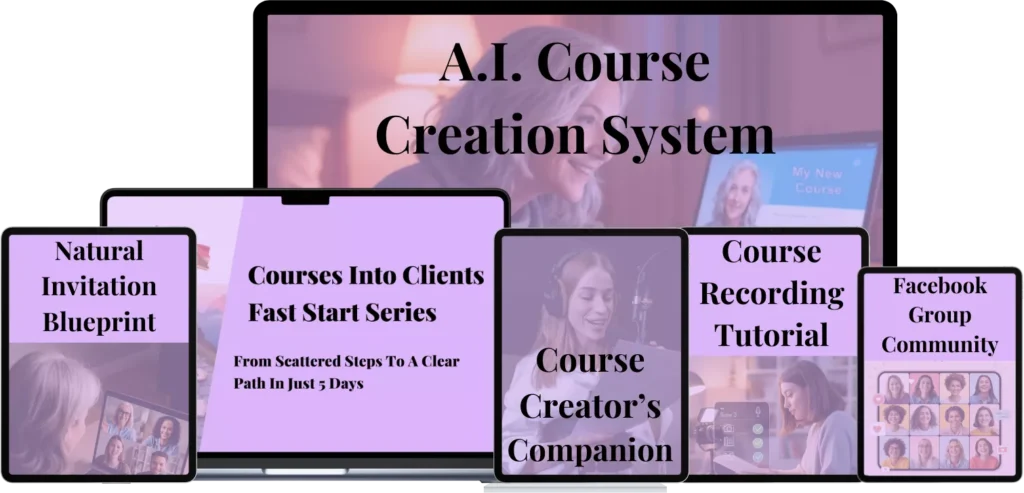
Only $497.00 $47 Today
Start Using The Courses Into Clients A.I. System For $497 Just $47! Access details sent immediately. Start making a real impact with your knowledge in the next 2 minutes.